Bugget
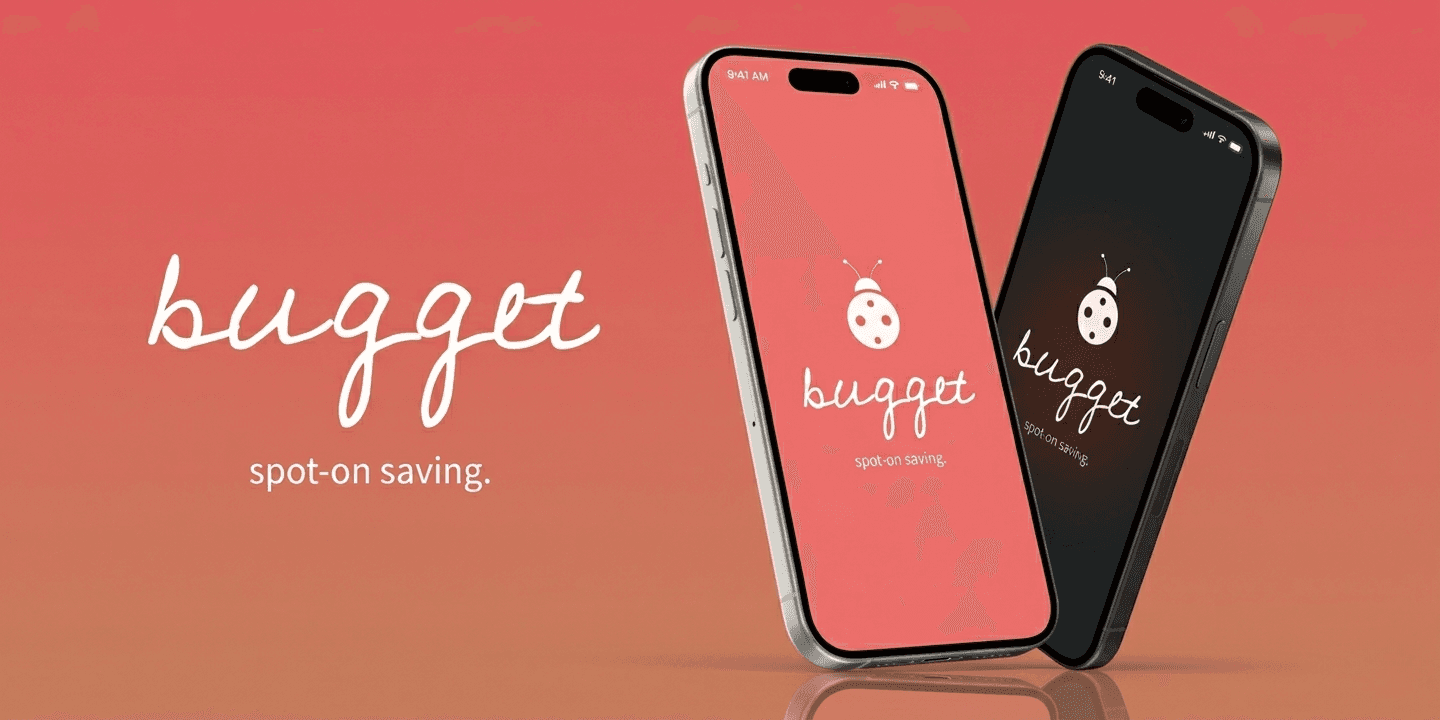
A mobile-budgeting app designed to bridge the financial literacy gap for college students. Bugget allows students to track their finances spot-on, and receive guided help that turns money management from a chore into a daily habit.
Spring 2025
Finance
UX Researcher & Product Designer
Solo
Challenge
College students and young adults avoid traditional budgeting tools because of their financial confidence combined with the complexity of all things money. How can we help students build financial confidence and encourage healthy money habits?
Results
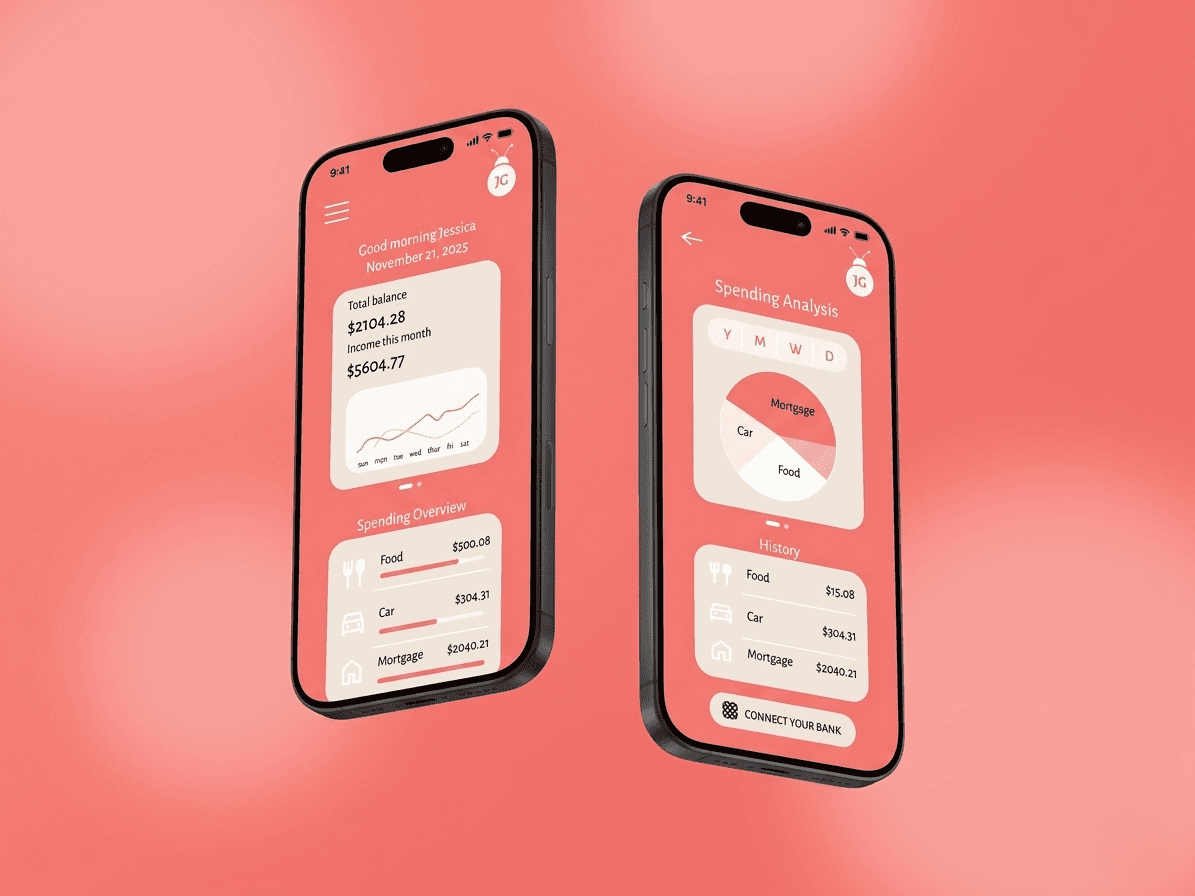
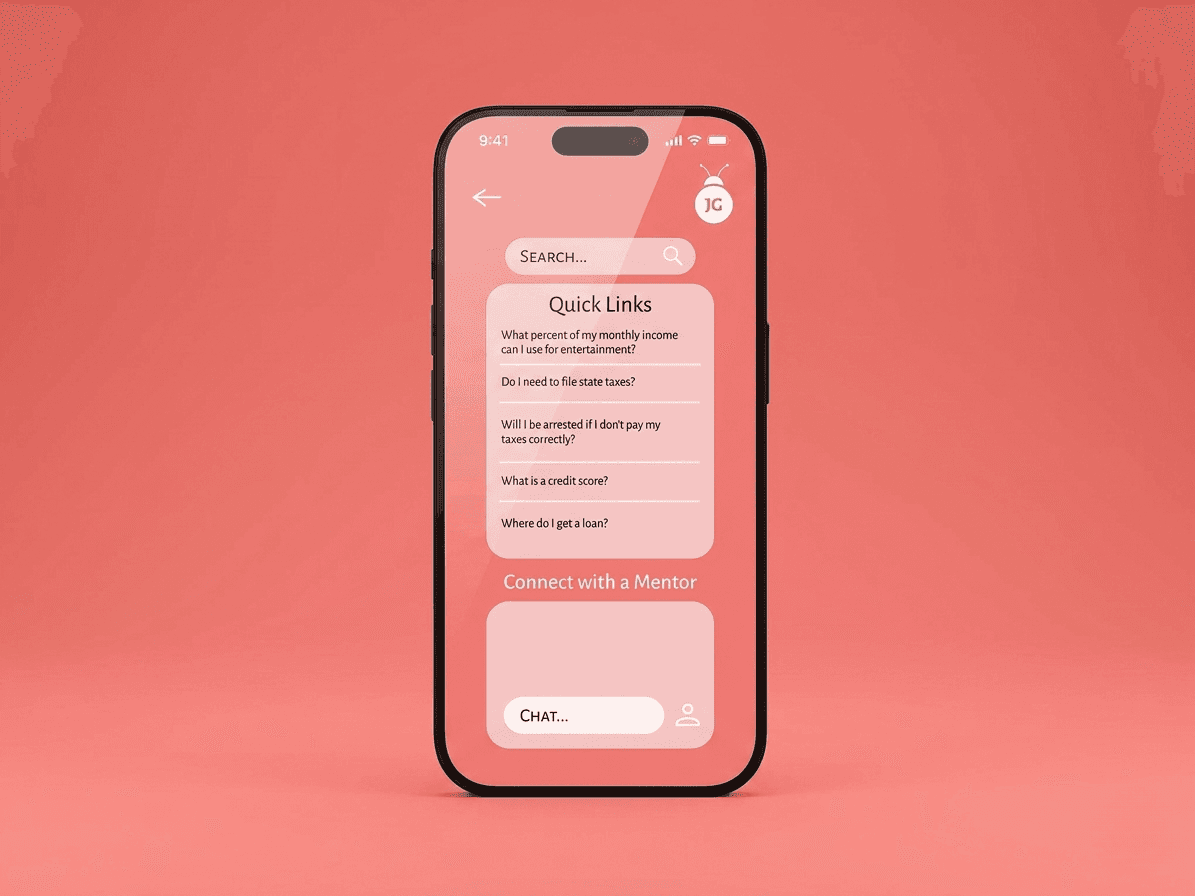
We designed Bugget. Bugget encompasses all the features you'd find traditionally in a budgeting app but without the confusion. We incorporated a "Guided Help" feature where students can talk to mentors for help with whatever finance related problem they have. We've also included a FAQ tab for students to browse popular questions that they might've been too embarassed to ask or just didn't know about.
45%
Students have a savings account
25%
Students in Debt
$1.84 trill
Total Student Loan Debt
Process
Research & Analysis: To figure out what was going to make our budgeting app different from other apps, I needed to understand our users first. I conducted surveys and interviews with students across the Southeast including universities like Gatech, UGA, GSU, KSU, AU, UAB, and UT Austin. We found a diverse set of responses spanning over students in pre-med, pre-law, pre-PA, computer science, psychology, business, and engineering. I then analyzed competing apps which didn't really exist specifically for college students who are in a unique phase of their lives. Generic apps did not meet their volatile needs, and research provided deeper insight on this. Through 64+ students interviews, I understood that students had a lot of questions about finance. They didn't really understand it yet, and they didn't feel a need to start planning. I organized our insights thematically paying special attention to the financial literacy gap.
Wireframing & Prototyping: Using our research insights, I was able to rapidly prototype a few lo-fidelity mockups coming up with different ideas on how to help students build financial confidence. After peer reviewing and receiving feedback, I understood which one of our concepts was most helpful to students: information. Students had a lot of questions, and it became Bugget's job to answer them. I incorporated a feature where FAQ's would appear and can browsed along with guided help sessions with mentors.
Usability Testing: I created hi-fidelity prototypes and tested several different color schemes with users before we found the right one. I didn't want to reinvent the wheel, so I focused mainly on the newer screens (guided help and FAQs) to generate more feedback there. Students were able to validate the ease of using the app and communicate any points of friction which were improved upon to lighten the cognitive load.
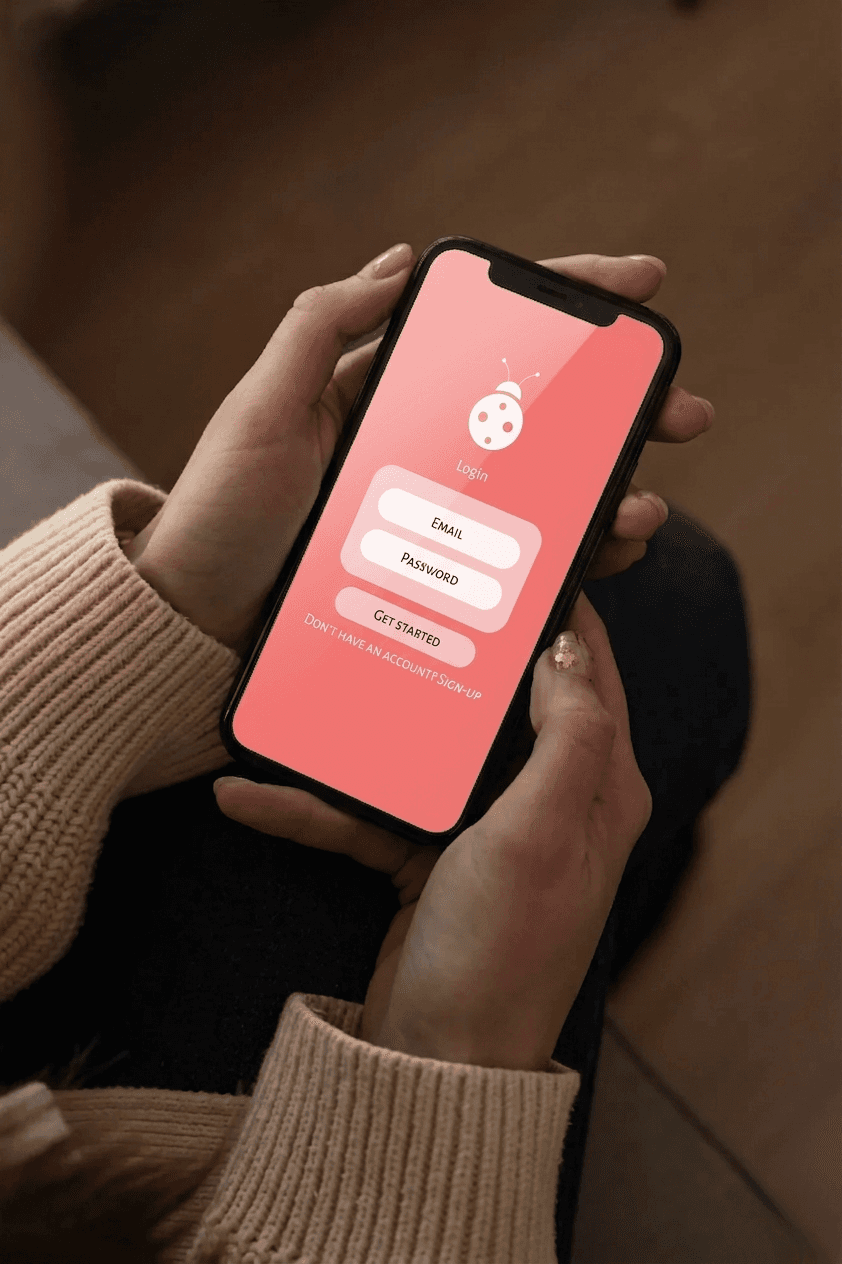
Visual Design & Style Guide: For Bugget's overall app design and style, I aimed to go for a warm and inviting theme that is curated to calm users. I used a ladybug as our mascot and designed to be a helping buddy for "spot-on savings". I opted for minimalist app design to avoid overwhelming the user as per research insights and utilized the ladybug as a motivating friend to encourage daily interaction in order to build healthy finance habits.
Reflection
Working on a budgeting app felt daunting because I felt like I was trying to reinvent the wheel. What could I do differently that others couldn't? Working alone, I was hitting a wall until I focused in on who I was designing for. This helped me figure out features and truly think about how someone was going to interact with it. I realized that it was important to stay curious and keep looking for solutions and answers which is what helps me to continue innovating and designing.